
Analysis: AI Singapore as a Driving Force in Realizing Singapore’s National AI Strategy 2.0 Ambitions
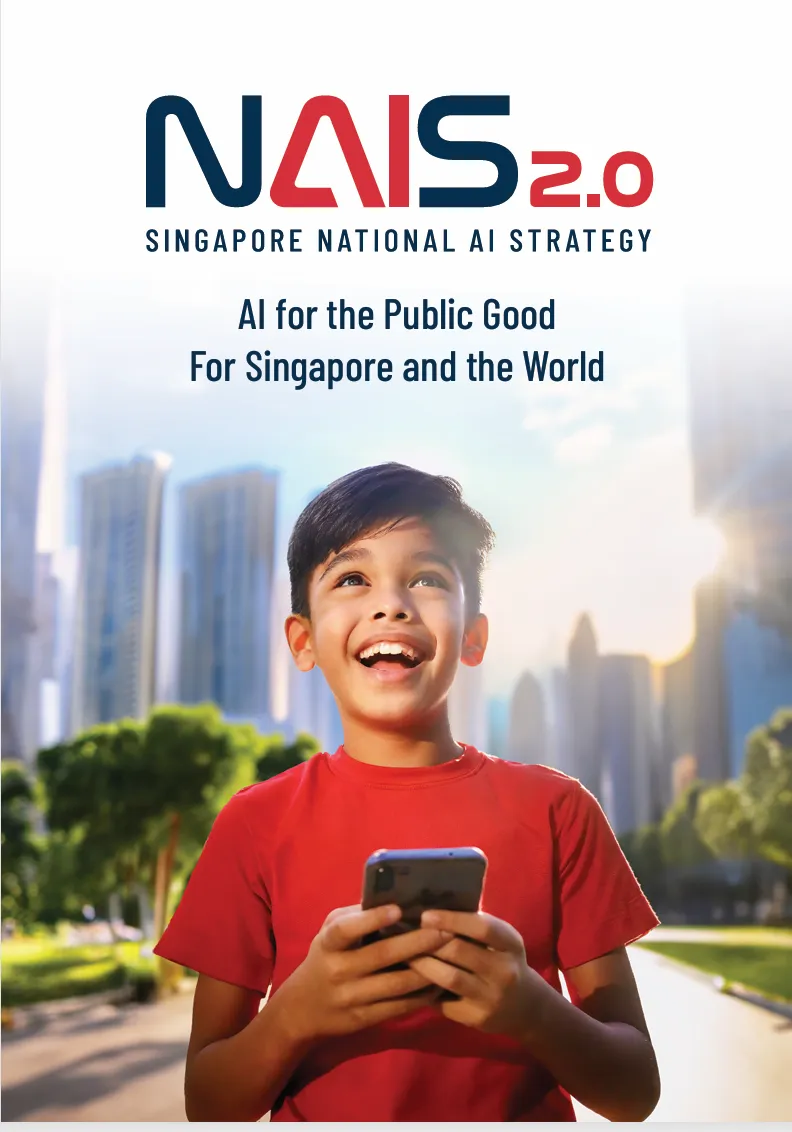
Singapore’s National AI Strategy 2.0 (NAIS 2.0) outlines a vision for the nation, emphasizing “AI for the Public Good” while addressing global concerns around the ethical development of the technology.
AI Singapore, a National Research Foundation initiative, has been driving AI innovation and capabilities domestically since 2017. This analysis shows how AI Singapore’s existing initiatives offer a solid foundation on which NAIS 2.0 can build, accelerate progress, and ensure effective implementation of the national strategy.
Key Areas of Alignment in Singapore’s National AI Strategy
Practical, Results-Oriented Approach:
- AI Singapore’s 100 Experiments (#100E) program focuses on applying AI solutions to real-world problems. NAIS 2.0’s push for tangible AI applications aligns perfectly.
- The 100E’s AI Engineering Hub (#AIEH), featuring collaborations with organizations such as Continental and ST Engineering, demonstrates how AI Singapore develops talent, transfers knowledge, builds industry partnerships, and tackles challenges faced by major companies. This directly supports the AI Center of Excellence (AI CoE) concept in NAIS 2.0.
Building a Skilled AI Workforce:
- The award-winning AI Apprenticeship Programme (#AIAP) will scale up to train more AI Engineers and a new track of AI Specialists, in line with the plan to triple the AI workforce to 15,000.
- LearnAI provides individuals with technical AI skills, in line with NAIS 2.0’s focus on talent development and workforce preparation for economic opportunities in AI. It will broaden its learning modules and add AI Ethics modules for professionals, equipping them to apply AI ethically and responsibly, and fostering an ethically AI-conscious workforce.
Global AI Leadership, Ethics and Responsibility:
- AI Singapore’s involvement in the Global Partnership on Artificial Intelligence (#GPAI), including leadership roles and the contribution of AI Singapore’s AI Readiness Index (#AIRI) and development of the #AI4SME portal, showcases its global reputation in AI thought leadership. Many governments have reached out to learn more about AI Singapore’s programmes such as the 100E, AIAP, and LearnAI. Training for Egypt and Malaysia to help them build their AI strategy has been completed. We expect to train another 2-3 countries in our programs, methods and best practices in 2024. This mirrors NAIS 2.0’s focus on global AI leadership.
- Ethics scrutiny in the 100E program and ethics modules in LearnAI and the AI Apprenticeship Programme show a proactive approach to embedding ethical considerations throughout the AI development lifecycle.
Elevating NAIS 2.0: AI Singapore’s Contribution and Global Reach
- Formal Case Studies: Document AI Singapore’s successful initiatives as concrete examples of ethical application, industry impact, and outcomes achieved. This gives NAIS 2.0 real-world proof points and models for success.
- Key Implementation Partner: Explicitly position AI Singapore as a cornerstone in realizing NAIS 2.0 goals, partnering on national initiatives like the AI CoE and workforce development programs.
- Scaling Success: Use AI Singapore’s AIEH and 100E models to expand the AI CoE and replicate proven processes of knowledge sharing and collaboration for a broader impact.
- Global Leadership Narrative: Highlight AI Singapore’s GPAI work to reinforce Singapore’s international reputation as a responsible AI leader, boosting the credibility and appeal of NAIS 2.0 globally.
Conclusion
AI Singapore’s track record, detailed in my book “AI-First Nation: A Blueprint for Policy Makers and Organisation Leaders,” demonstrates a strong foundation in practical AI implementation, commitment to ethical principles, and dedication to workforce development. NAIS 2.0 can act as a catalyst to scale up and amplify AI Singapore’s work. By drawing on existing resources and the collaborative model in the book, Singapore is not merely on track to achieve the goals of the national strategy but is setting a global precedent. The nation’s journey, as illustrated in the book, shows the power of an approach that combines research, innovation, and talent development while prioritizing responsible and ethical AI practices.
As Singapore continues to invest in AI, it can demonstrate how this transformative technology is harnessed for the greater good, fostering innovation, economic growth, and societal advancement domestically and globally, and inspiring other nations to embark on their own AI-First journeys.