“Yes, But What Do You Do?”
I recently came across a Youtube interview of John Dykes, the well-known sports broadcaster. He shared a story of his encounter with the late Mr. Lee Kuan Yew.
At a dinner, when introduced as the man who presents the Premier League, Mr. Lee shook his hand and asked a simple question: “What do you do?”
John replied that he was an anchor and presenter for football programming.
Mr. Lee looked him in the eye and asked again: “Yes, but what do you do?”
The question stripped away the job title. It stripped away the prestige of the employer. It demanded an answer about utility, about value, about contribution to the fabric of society.
John eventually realised his answer was: “I inform and entertain.”
The Questions
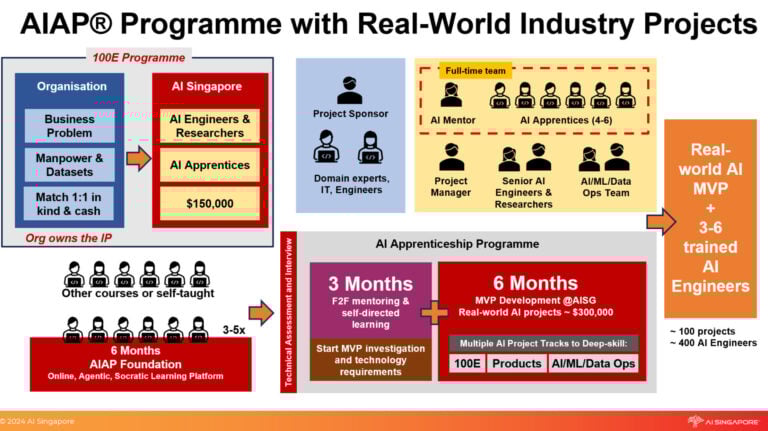
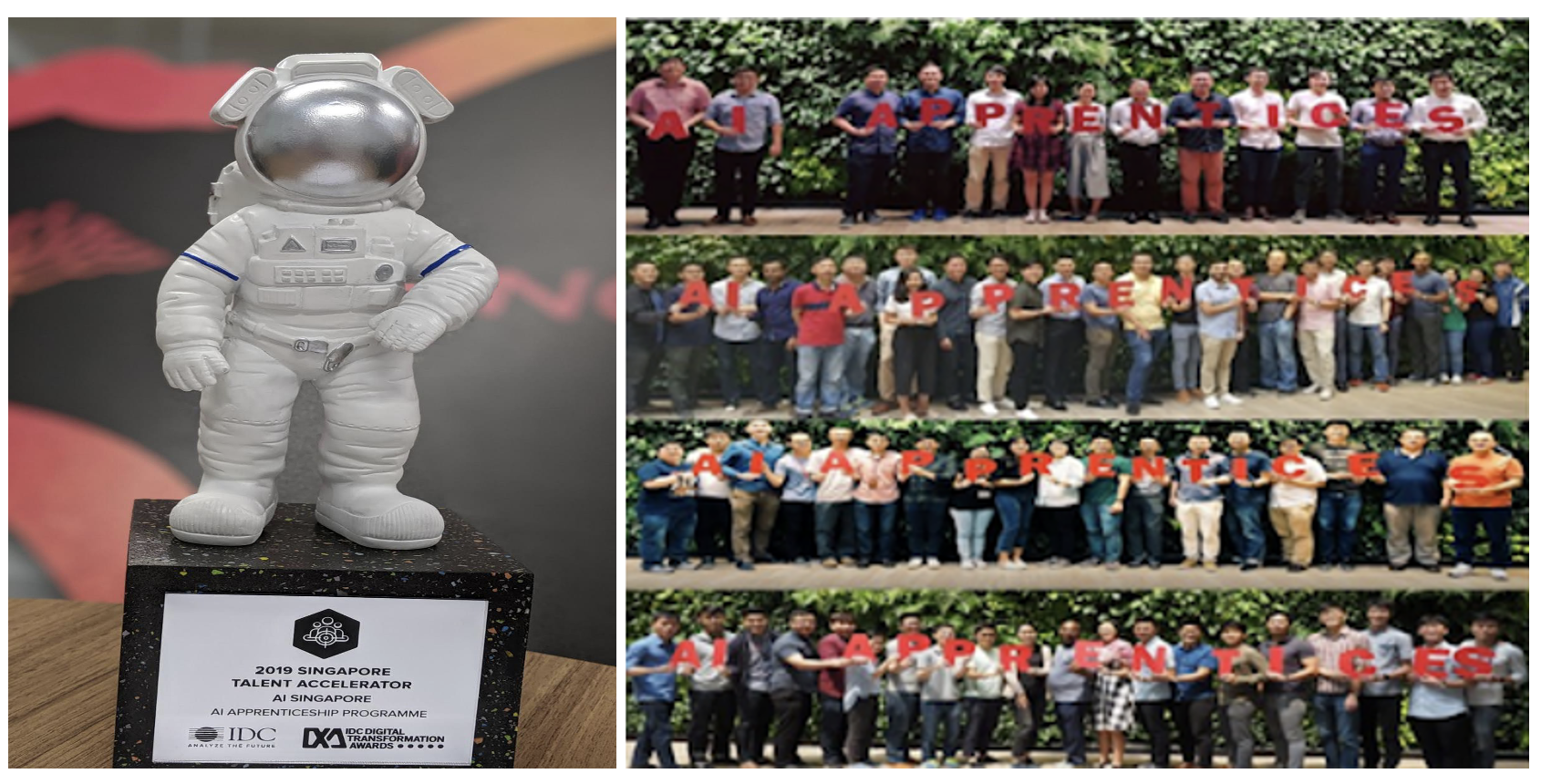
I often look at my team—the AI engineers in the 100 Experiments programme, the mentors in the AI Apprenticeship Programme—and I ask myself this same question about them.
We work in a field where the market is very hot. A skilled AI engineer in Singapore today has options. The banks, the big tech firms, the unicorn startups—they are all hiring. They offer equity, plush offices, and salaries that a government-funded programme often cannot match.
So, why are you still here? Why are you an AI engineer in AIAP or 100E? Why not join industry?
If your answer is “I write Python code” or “I deploy machine learning models,” you have missed the point entirely.
That is your task. That is not what you do.
Career and Currency
It is easy to measure a career by market metrics: salary bands, job titles, the brand value of the company on your LinkedIn profile.
If we measure success solely by these metrics, staying at AI Singapore is an irrational economic decision for many of our top engineers. We cannot match what the banks pay.
We cannot match what big tech offers.
But career and money are finite games. They are games played for the self.
When we founded AI Singapore in 2017, we started with four engineers. We advertised for positions and received 300 resumes. Only ten were from Singaporeans. I managed to hire one.
We faced a choice: compete in the “Red Ocean” and fight for a limited talent pool against Google, Microsoft, and Grab—or embrace a Blue Ocean strategy.
We chose to create talent rather than consume it.
We chose to grow our own timber.
This choice defines what we actually do.
We Are Building a Bridge
When I look at an AI engineer in our team today, I do not see someone who merely optimises hyper-parameters or tunes LLMs.
I see a bridge builder.
Every day, we take in apprentices—Singaporeans who are often pivoting from other careers, taking a leap of faith, sometimes accepting pay cuts to follow a calling. They come with passion and self-taught skills, but they are not yet industry-ready.
Our engineers and mentors are the bridge.
Consider what this means. Eighty percent of our apprentices do not have computer science degrees. They are biologists, accountants, mechanical engineers, economists.
They have domain expertise and the hunger to learn. What they lack is the pathway across the chasm—from aspiration to capability, from learner to practitioner.
We build that pathway. Nine months, full-time, working on real-world AI projects with real customers and real consequences.
“Yes, But What Do You Do?”
I am building a bridge.
I am constructing the pathway that allows a biologist, an accountant, or a mechanical engineer to cross the chasm of doubt and inexperience to become a real-world AI engineer.
When we execute a 100 Experiments project, we are not merely solving a business problem for a company. We are building the scaffolding for an apprentice to stand on. We are giving them the hands-on experience that tutorials and certifications cannot provide.
One of our pioneer batch graduates said it best: “There are many technical tutorials out there, but few offer the hands-on experience needed to address real-world problems, and that is one of the key differentiators of AI Singapore’s AI Apprenticeship Programme.”
He was right. Real-world experience cannot be replaced by theoretical training. You cannot build judgment in twelve weeks any more than you can build character.
If You Are Here, You Are Writing Futures
If you are an engineer on our team, you are not just writing code.
You are writing the future of the person sitting next to you. You are validating their dream. You are proving that a Singaporean core of AI talent is not a fantasy, but a reality we construct day by day, apprentice by apprentice.
We have trained more than 500 AI engineers. Nearly everyone one of them is in an AI or related role today. Three hundred real-world projects completed. Sixty percent of our apprentices discovered the programme through word of mouth—a brother recommending his sibling, a graduate recommending his spouse.
This is not marketing. This is evidence that what we do matters.
Beyond the Rankings
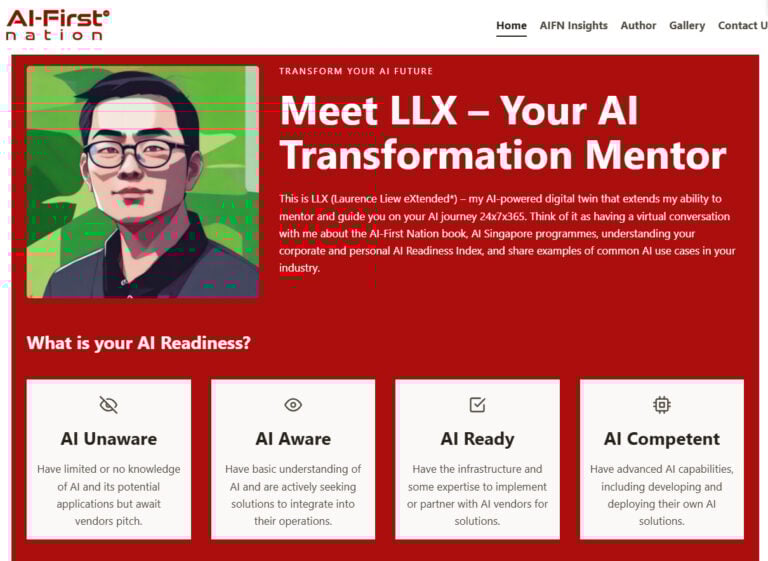
We often see reports ranking Singapore as an “”AI-First Nation””Number #1 in Digital or AI this or that”. We see the OECD’s Global Partnership on Artificial Intelligence adopting our AI Readiness Index (AIRI) frameworks and our AI For Everyone course materials for the AI For SME Portal project. It is gratifying.
But it is not the intent.
Ranking high and appearing in global reports was never the goal. Those are lagging indicators. They are the scoreboard, not the game.
The game is human capital.
The intent is to ensure that in this era of disruption, our people are not left behind. The intent is to ensure that when the wave of AI washes over the global economy, Singaporeans are the ones riding the wave, not the ones drowning beneath it.
The World Economic Forum projects that AI will displace 92 million jobs globally while creating 170 million new ones. The net gain is significant—but only if people can navigate the transition. Only if there are bridges to carry them across.
The Answer
So, when someone asks you: “You are an AI engineer at AI Singapore… what do you do?”
Do not tell them you use PyTorch. Do not tell them you clean data. Do not tell them you deploy machine learning models.
Tell them:
“I build human potential. I braid the bridge that allows my fellow citizens to realize their best selves and secure their future in a digital world. I ensure that my nation does not just consume technology, but creates it.”
“I build human potential. I braid the bridge that allows my fellow citizens to realize their best selves and secure their future in a digital world. I ensure that my nation does not just consume technology, but creates it.”
That is what we do.
That is why we are here.