The AI Confusion is Real. Our Execution is Not.
You hear the statistics. High failure rates. Implementation costs averaging $1.9 million. A workforce largely unprepared for the shift. When you examine global averages, these observations hold water. The confusion is palpable. The costs are substantial.
However, we must not confuse a lack of discipline with a lack of potential.
At AI Singapore, we have witnessed a different reality unfold. By treating AI not as some mystical black box but as a rigorous engineering discipline, we have developed a blueprint that systematically dismantles the barriers of cost, talent, and readiness.
Here is how we are addressing the core challenges facing the industry today.
1. Solving the “Readiness” Paralysis
Analysts report that 71% of CIOs feel their workforce is not ready. This often leads to organizational paralysis or expensive, directionless “change management” contracts that produce impressive PowerPoints but little tangible progress.
We do not wait for readiness. We engineer it.

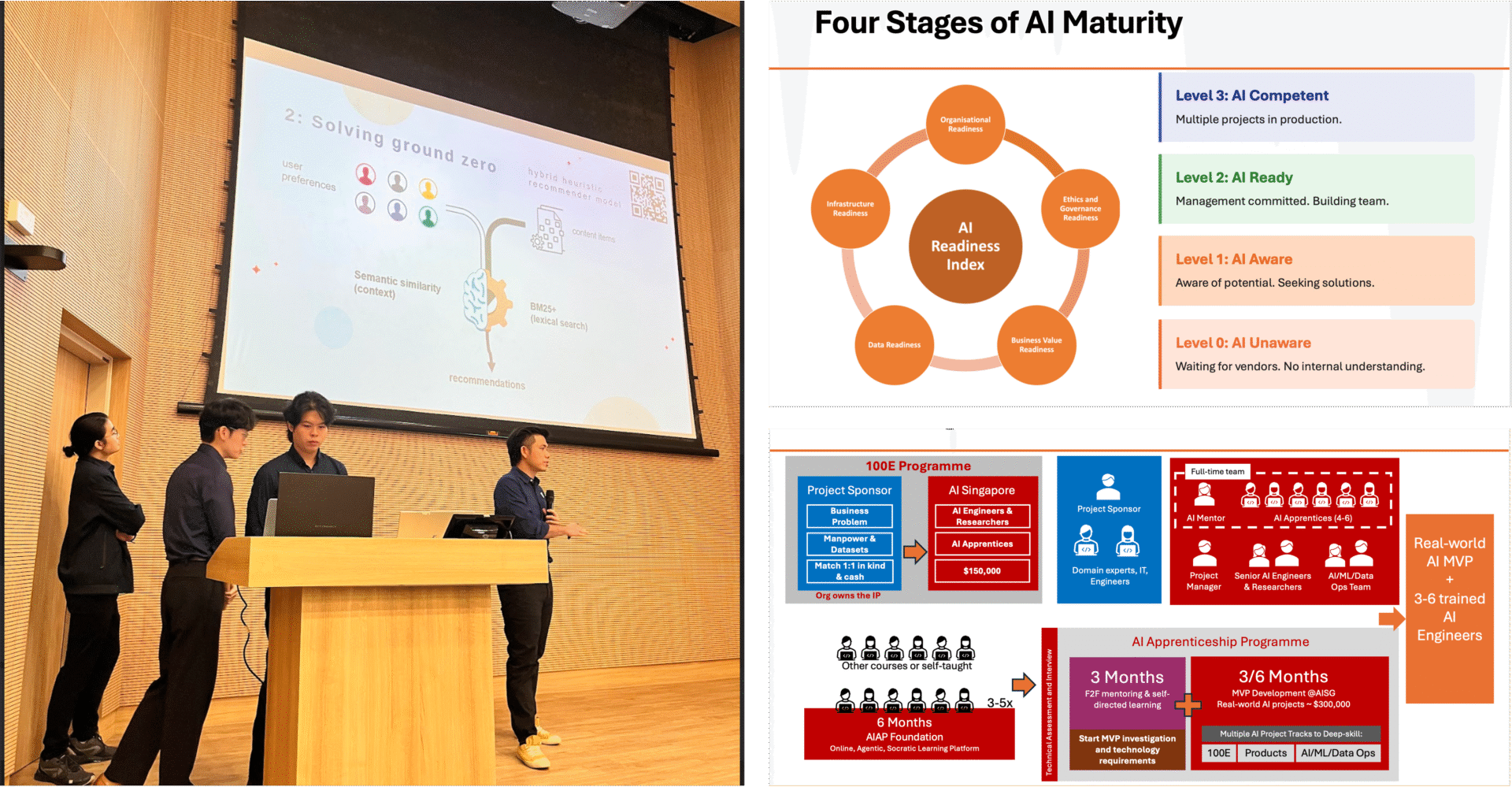
We deployed the AI Readiness Index (AIRI) to give organisations a clear, metric-based assessment of their maturity across five pillars: Organisational Readiness, Business Value Readiness, Data Readiness, Infrastructure Readiness, and Ethics and Governance Readiness. In fifteen minutes, a company can understand exactly where they stand and what interventions they need.
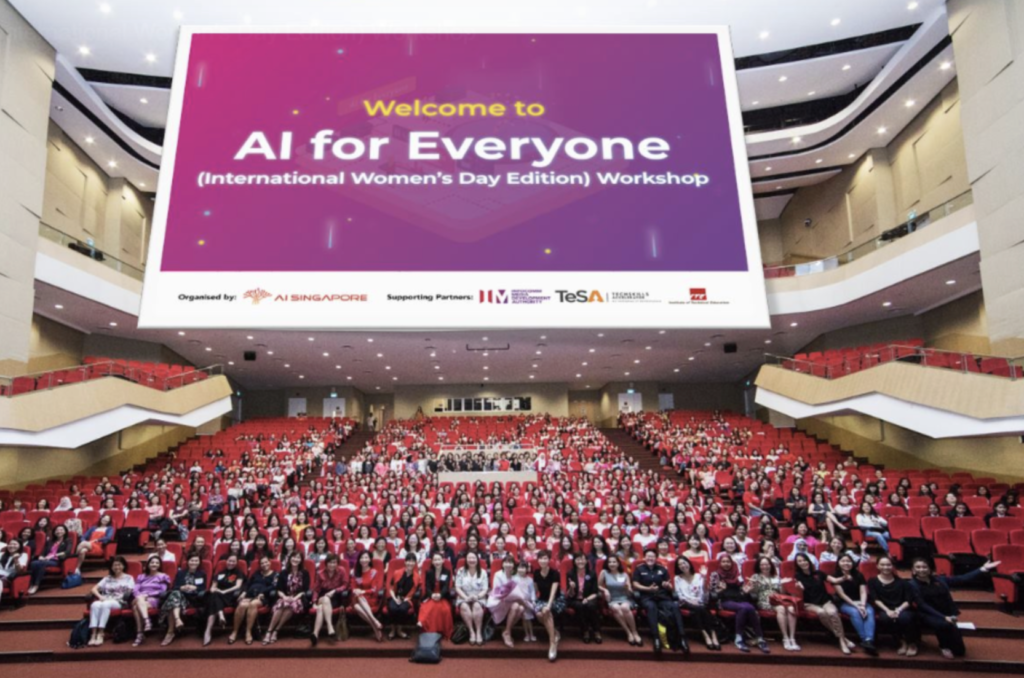
Through our For Everyone (AI4E) initiative, we have successfully moved over 250,000 Singaporeans from “Unaware” to “Aware.” The programme is now embedded as a national course across all polytechnics, ITEs, secondary schools, junior colleges, and the Civil Service College.
Readiness is a metric we can manage, not a weather condition we must endure.
2. The “Junior Gap” and the Talent Crisis
There is a growing trend of “hiring restraint” for junior roles, as senior staff leverage AI tools to absorb entry-level tasks. This creates a dangerous long-term deficit: if we do not hire juniors, where will the seniors of tomorrow come from? We are essentially eating our seed corn.
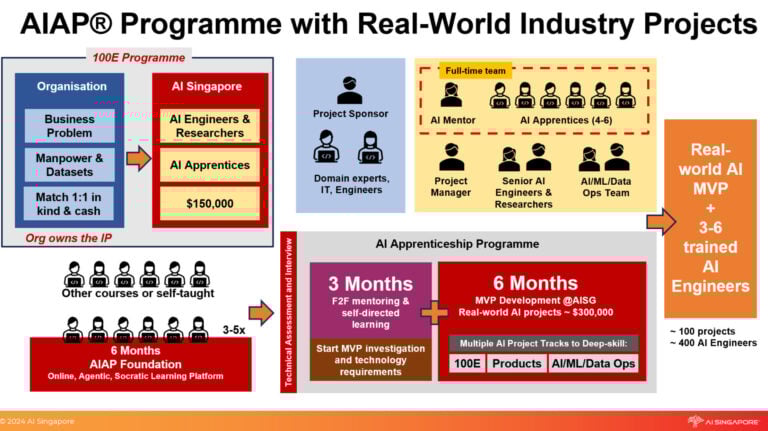
Our answer is the AI Apprenticeship Programme (AIAP). We do not stop hiring. We change how we train.
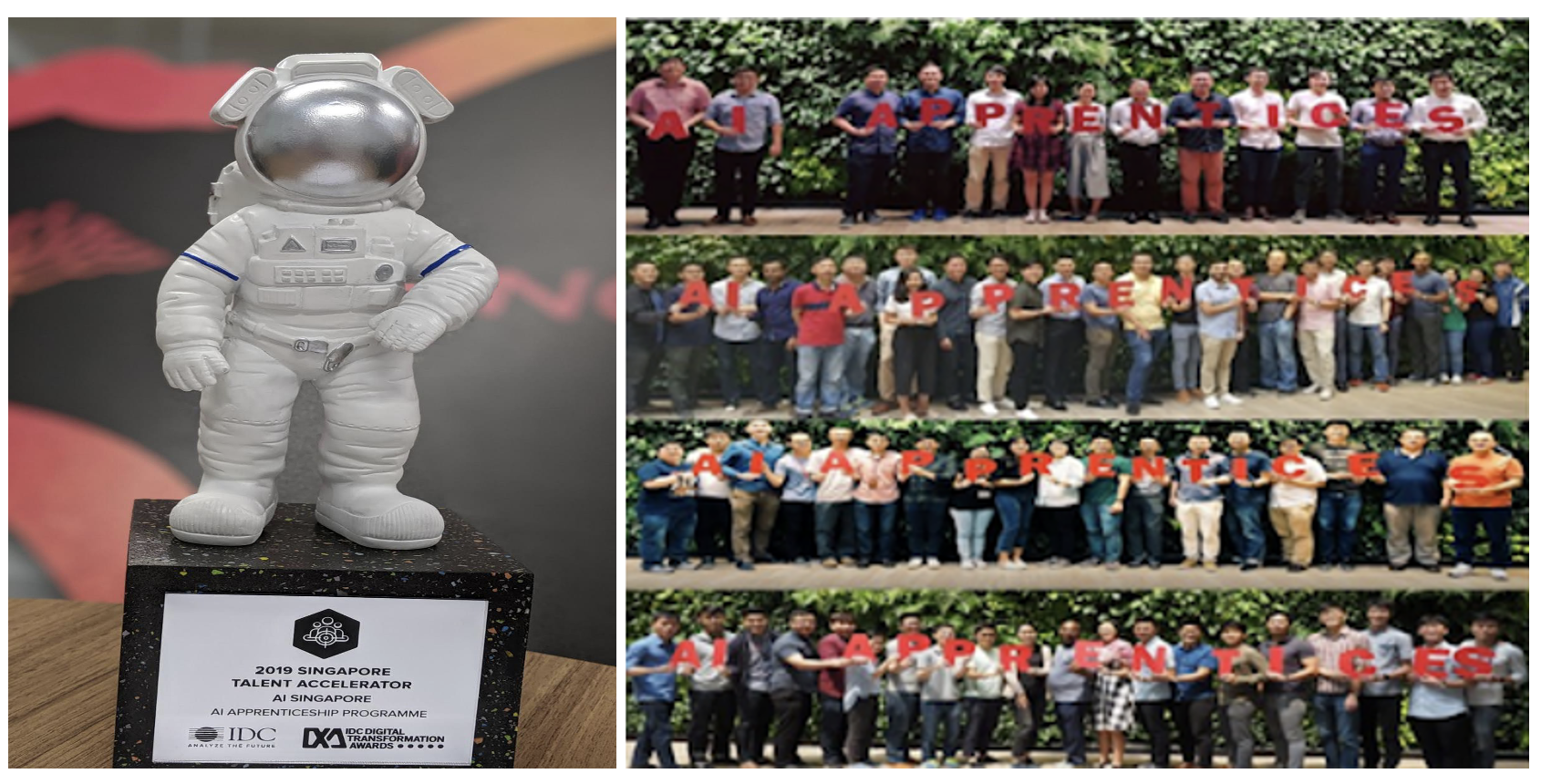
We take juniors and mid-career professionals and immerse them in what I call a “pressure cooker” of real-world development for nine months. This is not a bootcamp. This is not theoretical instruction. Apprentices work on actual 100E industry projects valued at approximately SGD $300,000 each, delivering production-ready AI models for real companies with real stakes.
The result? We have trained over 500 Singaporean engineers who are deployment-ready on day one. More telling: 80% of our successful graduates do not hold computer science degrees. They come from chemistry, finance, nursing, law, and countless other domains. They bring irreplaceable domain expertise. We add the capability on top.
We grow our own timber rather than competing for a finite pool of senior talent that everyone else is fighting over.
3. Reducing Failure Rates through the 100E Model
The industry average for project success is often cited as one in five. This typically happens when organisations attempt “moonshots” without the necessary data infrastructure, clear business value, or engineering capability to take over what gets built.
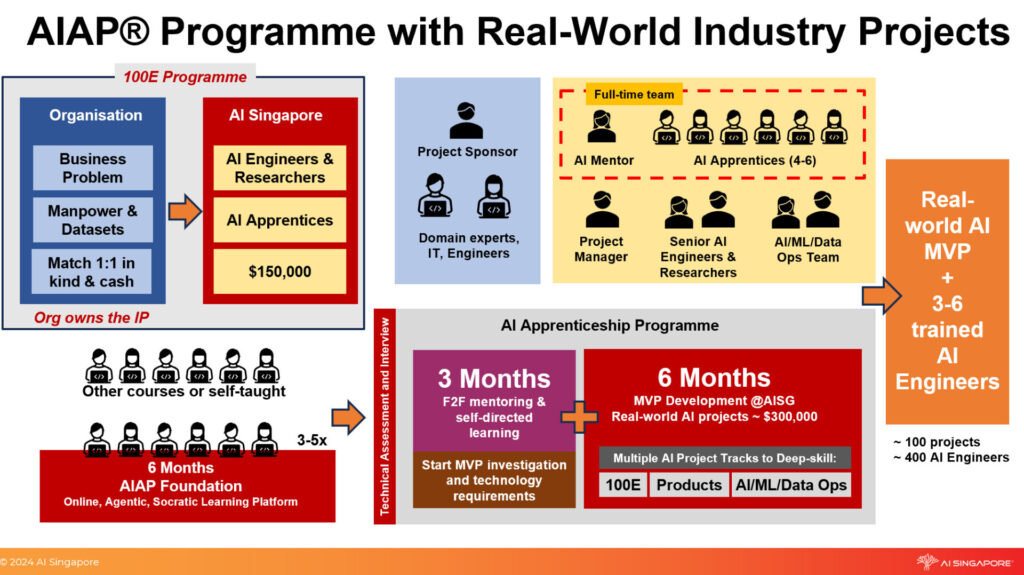
Our 100 Experiments (100E) programme takes a fundamentally different approach.
We enforce a strict gatekeeping process using AIRI. We co-fund projects to cap the risk, with AI Singapore contributing SGD $150,000 in-kind matched one-to-one by the project sponsor. We mandate a seven-month timeline to deliver a Minimum Viable Product. The organisation owns the intellectual property. And critically, the project sponsor must demonstrate they have an engineering team capable of taking over the solution after handover.
By focusing on specific, solvable business problems rather than broad “transformation” initiatives, our deployment rate exceeds 50% across more than 300 completed projects. That is more than double the industry norm cited in recent reports.
The difference is discipline, not magic.
4. Sovereignty and Ownership
Finally, there is the fear of vendor lock-in and data sovereignty. Too many organisations have surrendered control of their most critical capabilities to proprietary black boxes they neither understand nor control.
Instead of perpetual dependence on external vendors, we advocate for building internal capability. What we call “Competence” in our framework. Through 100E, the intellectual property generated belongs to the project sponsor. Not to Singapore. Not to any vendor. To the organisation that funded and partnered on the work.
We empower organisations to own their models and their destiny. This is not about rejecting commercial solutions. It is about ensuring organisations have the judgment and capability to evaluate, integrate, and govern whatever AI solutions they choose to adopt.
The Verdict
The challenges raised by analysts are valid, but they are not insurmountable. They are symptoms of an immature ecosystem still learning how to treat AI with engineering rigour rather than magical thinking.
If we apply engineering discipline, focus on PLUS-skilling our workforce by adding AI capabilities to existing domain expertise rather than starting from zero, and structure our projects with the rigour they deserve, we do not just survive the AI transition. We lead it.
We are building an AI-First Nation. The map exists. You just need to follow it.